Larger China’s younger dwelling paycheck to paycheck
Eric Hsu remembers a time when he was 10 days away from payday and had simply $32 left. He had no financial savings.
“I used the remaining cash I had to purchase loaves of white bread and I ate that for all three meals till my pay got here in,” he instructed CNBC Make It.
“Generally I might suppose, I’m not incomes little, I might really suppose I am incomes an upper-middle revenue wage. However I nonetheless really feel actually poor each month.”
Hsu belongs to a gaggle of individuals in Taiwan, usually younger and single staff, referred to as the “yue guang zu” — the so-called “moonlight clan.”
The time period describes being broke on the finish of every month, or as Hsu describes it, “Cash is available in from my left hand and out from the best.”
This habits may be very completely different from their dad and mom’, who actually saved each single cent they’ve.
Chung Chi Nien
Hong Kong Polytechnic College
The time period originated from Taiwan however is now additionally regularly utilized in mainland China and Hong Kong to explain the youthful technology, stated Chung Chi Nien, a chair professor from Hong Kong Polytechnic College.
An estimated 40% of younger singles who dwell in Beijing, Shanghai, Guangzhou, and Shenzhen live paycheck to paycheck, in keeping with a neighborhood report.
“This habits may be very completely different from their dad and mom’, who actually saved each single cent they’ve. However the youthful technology spends each single cent they’ve,” stated Chung, who makes a speciality of financial sociology.
The rising value of dwelling has put extra people liable to being within the “moonlight clan,” particularly these with low revenue, stated Chung.
Whereas Taiwan’s inflation charge of two.4% is way decrease in contrast with many elements of the world, shopper costs and meals prices are nonetheless on the rise.

For 34-year-old A-Jin, fastened bills like insurance coverage, utilities and transportation already take up “greater than half” of her wage of 30,000 New Taiwan {dollars} (about $985) a month, she instructed CNBC Make It.
“I might be left with NT$10,000 a month for meals and different bills. Consuming out now prices round NT$300 a day. There isn’t any approach to save,” stated A-Jin, who works within the service business.
“If an emergency occurs to me, like a automotive accident — I might not have any money to cope with it.”
Not simply inflation
However for some others, it is the “you solely dwell as soon as” mentality that is encouraging them to spend what they will — even when it means taking over debt.
Ever since Hsu began working 10 years in the past, the civil engineer struggled to build up any financial savings as a result of he was attempting to repay his scholar money owed.
“As an alternative of saving leftover cash I had on the finish of the month, I made a decision to repay my money owed as an alternative,” in keeping with CNBC’s translation of his Mandarin feedback.
I did let it get out of hand and was like, since I’ve a bank card, let’s buy a automotive whereas I’ve it.
However when a critical knee harm took him out of labor for 2 weeks with out pay, Hsu realized he was unable to assist himself.
“I assumed, since I can use a bank card to pay for issues and make my life simpler, why not?”
However earlier than he knew it, he had as many as 4 bank cards and nearly 70% of his wage every month was going into paying off such money owed — leaving little left to avoid wasting.
Hsu acknowledged that whereas half his debt was for crucial every day bills, the opposite half was incurred due to his “life-style decisions and wishes.”
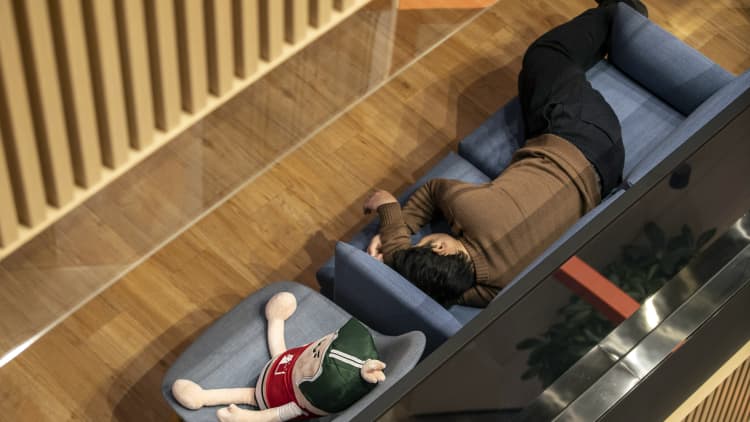
“I did let it get out of hand and was like, ‘since I’ve a bank card, let’s buy a automotive whereas I’ve it,'” 38-year-old Hsu stated.
“With on-line purchasing, you additionally get uncovered to a plethora of issues you should purchase and the truth that you can also make purchases so simply didn’t assist.”
‘Small, however very sure happiness’
The idea of “moonlight clan” displays the disillusionment that younger individuals really feel about life as of late, stated Chung, the professor. It is very similar to different phrases which have gained reputation in China up to now two years, resembling “tang ping” and “bai lan.”
“Within the context of East Asia, the moonlight clan’s dad and mom have skilled very profitable industrialization and fulfilled their targets of their lives,” he added.
“However that could be a completely different actuality for this technology … they see the success of their dad and mom, however merely can’t obtain it. There’s an enormous hole between expectation and actuality.”
The “moonlight clan” exists primarily as a result of home possession is now not attainable for the younger in Taiwan — due to the dearth of reasonably priced housing, stated Chung.
It may very well be something from shopping for a cup of espresso from Starbucks, to happening an abroad journey — issues that will provide you with a small sense of happiness to compensate for the lack of an general purpose in life.
Chung Chi Nien
Professor, Hong Kong Polytechnic College
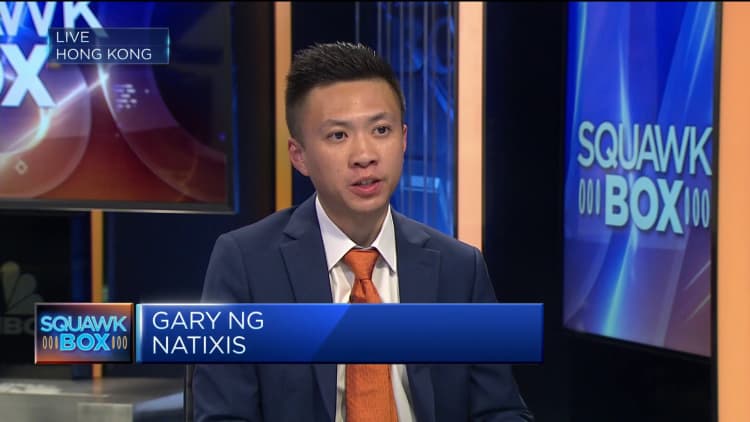
In line with the U.N. Habitat, housing is taken into account reasonably priced when the house-price-to-income ratio is 3.0 or much less.
Compared, Taiwan’s present ratio is 9.6 and 15.7 in Taipei metropolis, in keeping with its Ministry of the Inside.
“The expectation to purchase your individual home, get married and construct your individual household is now means too far to achieve,” Chung stated.
“Younger individuals would fairly hand over that dream and spend cash on issues they’re assured to get in the present day.”
These items are referred to as “xiao que xin” — which implies “small, however very sure happiness” in Mandarin.
“It may very well be something from shopping for a cup of espresso from Starbucks, to happening an abroad journey — issues that will provide you with a small sense of happiness to compensate for the lack of an general purpose in life,” Chung instructed CNBC Make It.
Hsu agreed, sharing a standard saying in Taiwan that describes the present state of affairs: “Homes are usually not for dwelling, however for investing.”
“A 3-bedroom now prices NT$20 million. How lengthy do I would like to avoid wasting with my annual wage of NT$720,000?”
“You’d solely be critical about doing one thing if in case you have a robust purpose. With out the potential for shopping for a house, it is like, ‘There is not any level making a living if you happen to do not spend it,'” he added.
No long-term targets
A-Jin stated she has no long-term monetary or life targets and has “utterly given up” on shopping for her own residence.
“So long as I’ve meals to eat and my abdomen may be full, I will not die. That is sufficient for me,” she stated.
“Since all the pieces else is unattainable, I simply consider how I may be kinder to myself, that is all.”
For Hsu, he considers the hardest days to be behind him. After his expertise, he canceled his bank cards two years in the past and dedicated to saving one third of his wage every month.
To not know whether or not you have the funds for for meals till the subsequent payday was a really scary state to be in — however that was my very own doing and the punishment matches the crime.
Nonetheless, he nonetheless considers himself a part of the “moonlight clan” as a result of he stays unsure about whether or not he’d survive one other emergency.
“I nonetheless haven’t any long-term monetary targets … My precedence is to clear the rest of my bank card money owed. I’m solely pushed by the concern of going hungry once more,” he stated.
“To not know whether or not you have the funds for for meals till the subsequent payday was a really scary state to be in — however that was my very own doing and the punishment matches the crime.”
Do not miss: Assume it’s too late to modify jobs? Inform that to ‘Asia’s greatest feminine chef’
Like this story? Subscribe to CNBC Make It on YouTube!